MARSAD / CONSOLIDATED CATALOG / #005
Ambulance crew attending a fainted person
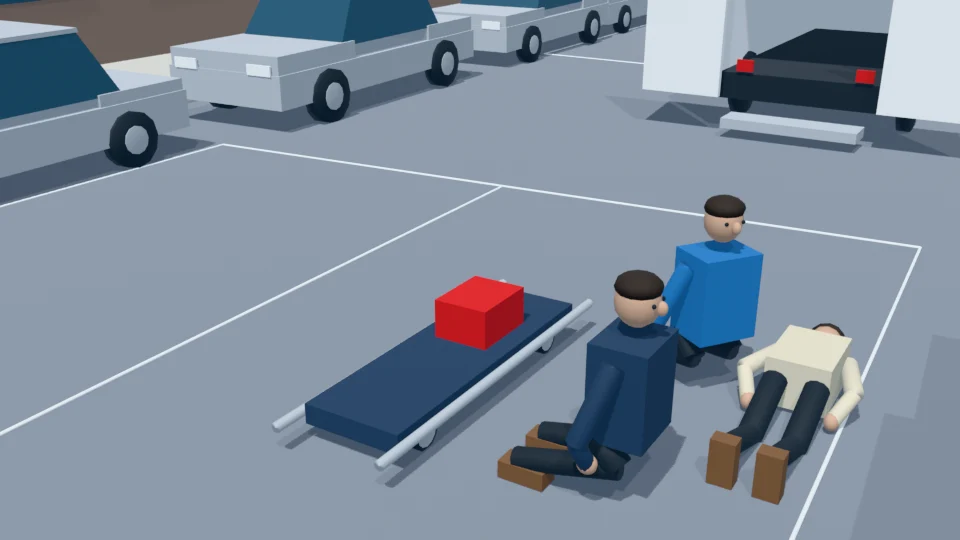
Awaiting your 3D scene approvalCounterfactual proposal: an ambulance is already stopped ahead. Two crew members alight through its rear doorway, jointly carry a stretcher with secured medical equipment, set it beside a fainted adult, and kneel to provide non-graphic care. Two bystanders watch. Treatment and the roadway obstruction persist.
Original description: 有一个人晕倒,前方有医护人员从一辆救护车上下来,携带担架和医疗设备,前往晕倒的人附近进行紧急救治,周围有行人停留围观
Loading the full animated scene…
Critical moments
What to verify
- Require human review of alighting, shared carrying, set-down and the 9-second care state before any image generation.
- Verify exactly one ambulance, two crew members, one patient, two bystanders, one stretcher and one equipment case.
- Play the complete -7 to 40 second interval at 20 Hz with 941 inclusive frames and persistent identities.
- Verify initially enclosed actors and equipment remain present and become visible through the open rear doorway, not by spawning or passing through body panels.
- Verify deck-to-step-to-ground support during alighting; every standing or walking person on the road must have z=0.
- Verify synchronized carrier spacing, forward hand contacts at both stretcher ends, continuous attachment release at 5 seconds and continuous lowering through 7 seconds.
- Verify vehicle and ground-object footprints remain on the police road polygon, and the sidewalk bystander remains within the mapped south sidewalk.
- Verify the prone patient, stretcher and kneeling crew have separate body footprints except intended non-graphic hand contacts.
- Keep ego stopped through 40 seconds; neither treatment nor the ambulance obstruction is resolved within this rehearsal.
Review notes
Reviewed ambulance departure, stretcher carry, prone patient and treatment close-ups. Open rear ambulance, two medics, stretcher and red equipment bag are recognizable. Patient remains prone; medics approach then kneel. Stretcher hand contact is approximate.
Check action, relative position, facing, posture and visibility. Approximate offsets are acceptable. Sampled visual checks do not prove every contact or continuous collision clearance.
Rendered inspection views
Event, approach and final views rendered from the exact committed Higgsfield Blender source. These are procedural 3D previews, not generated training photographs.
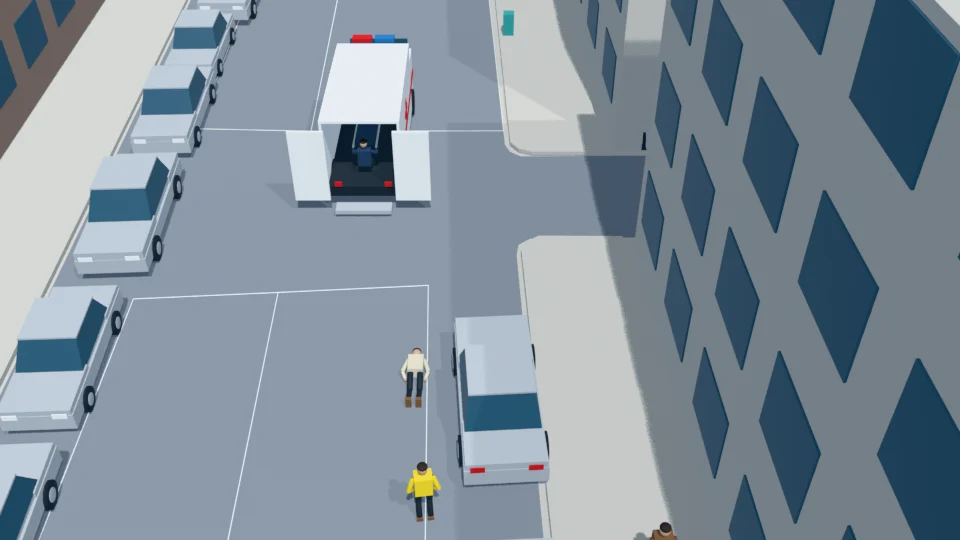
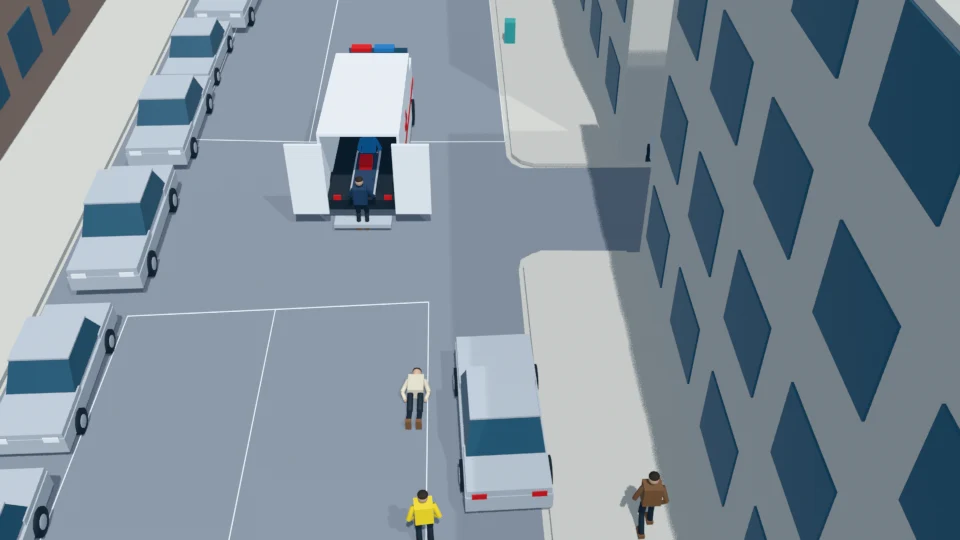
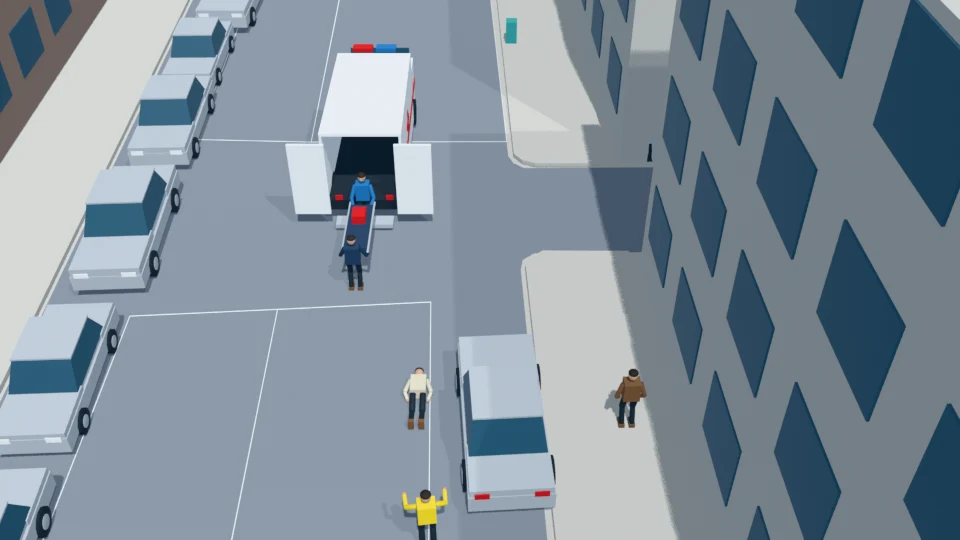
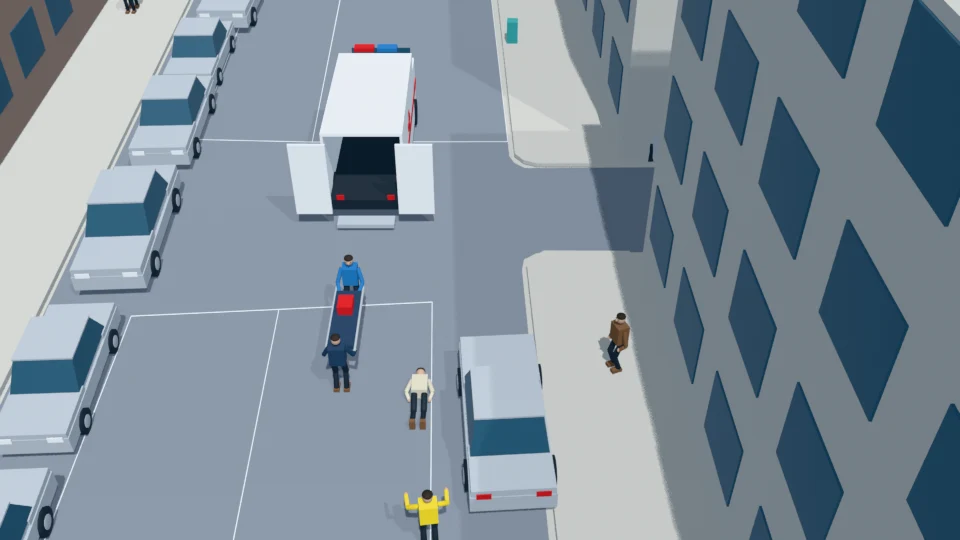
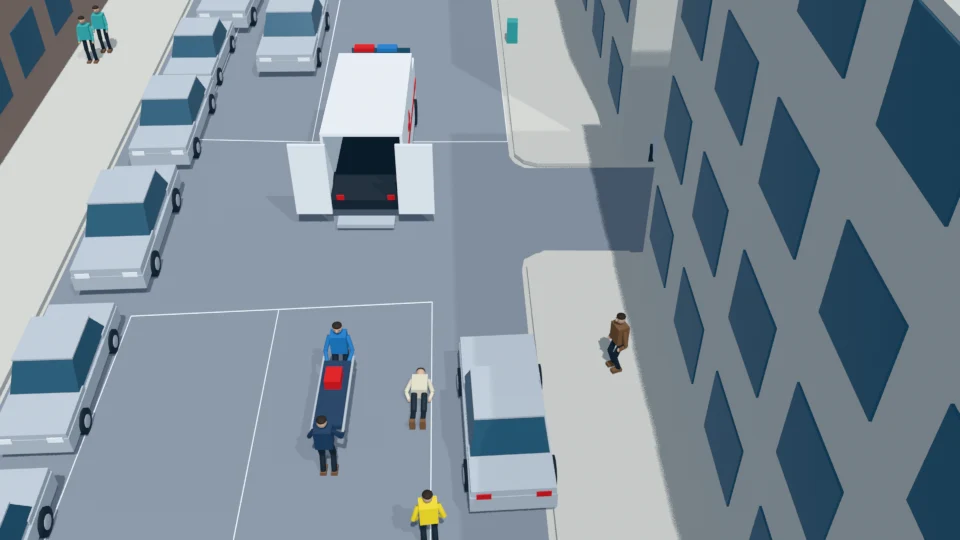
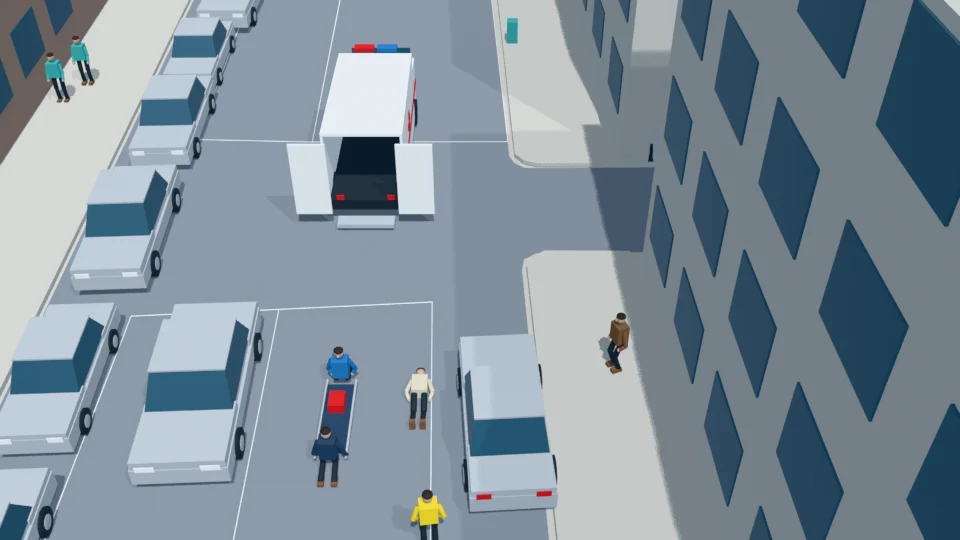
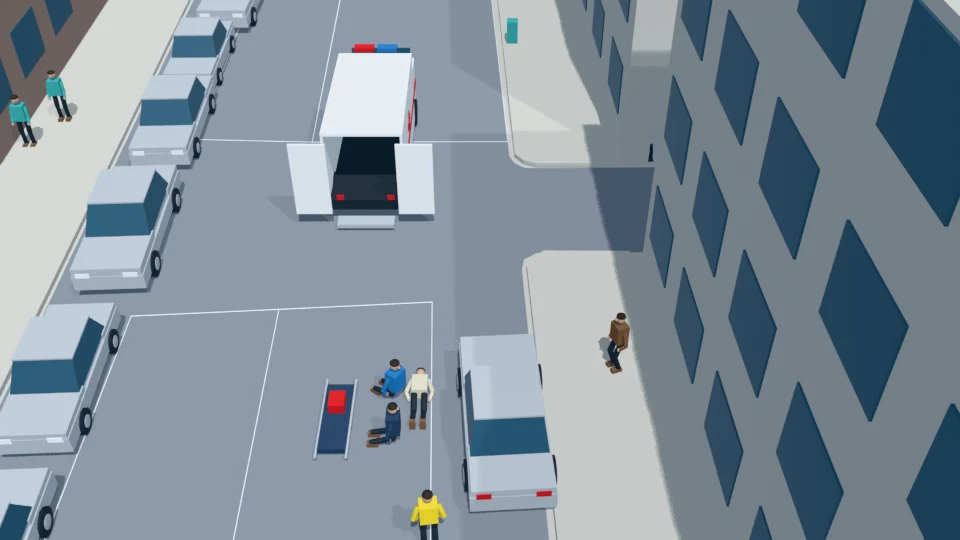
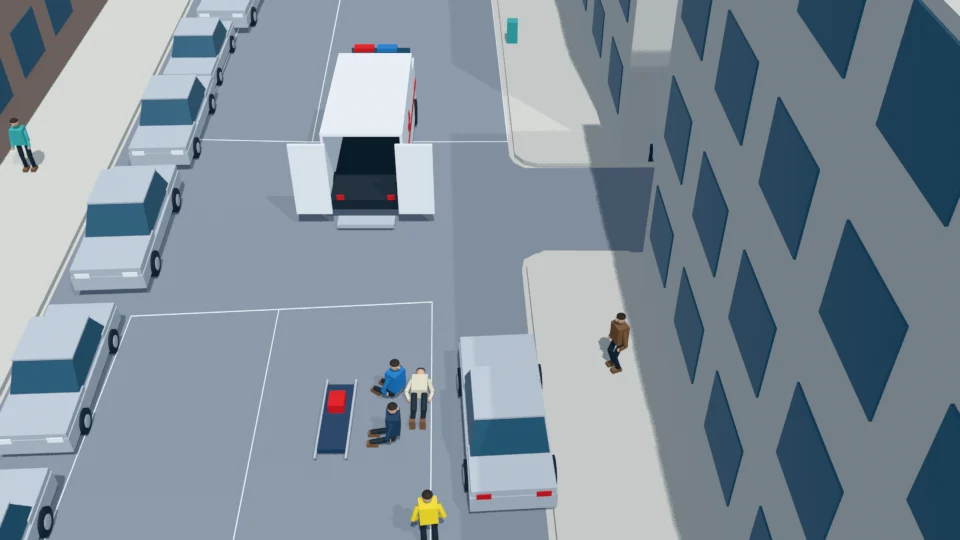
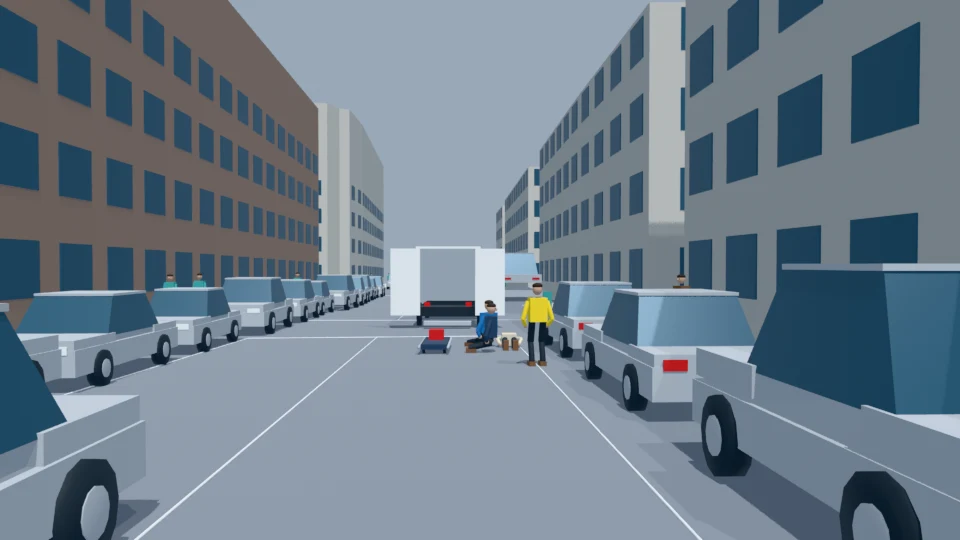
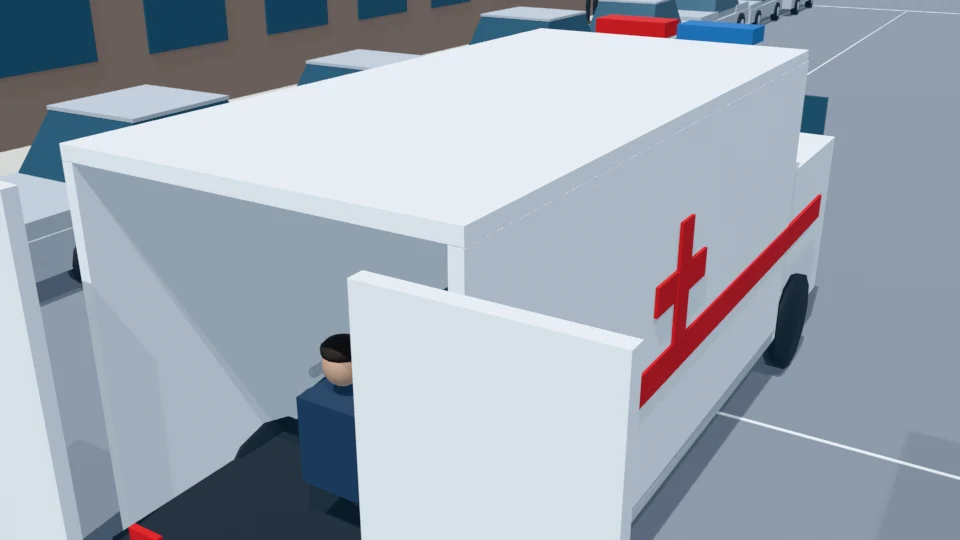
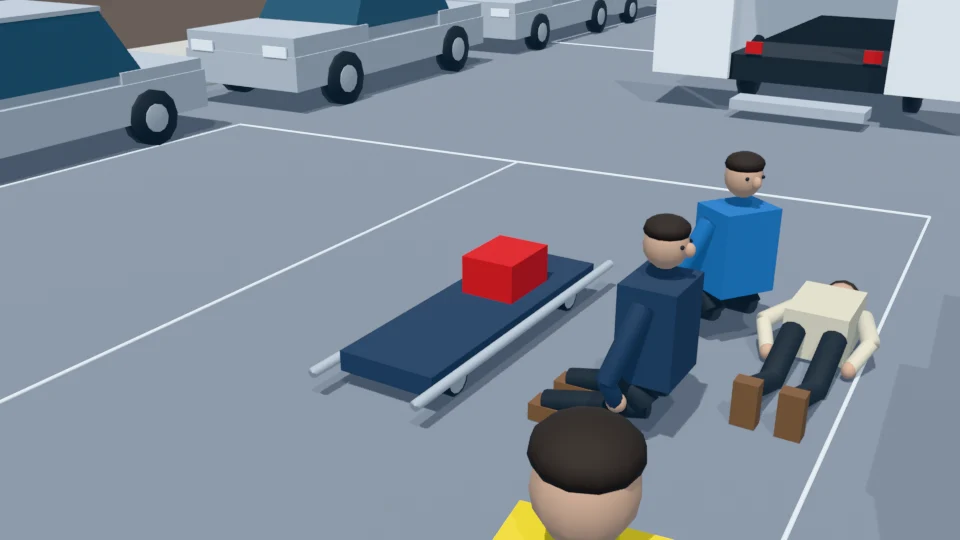
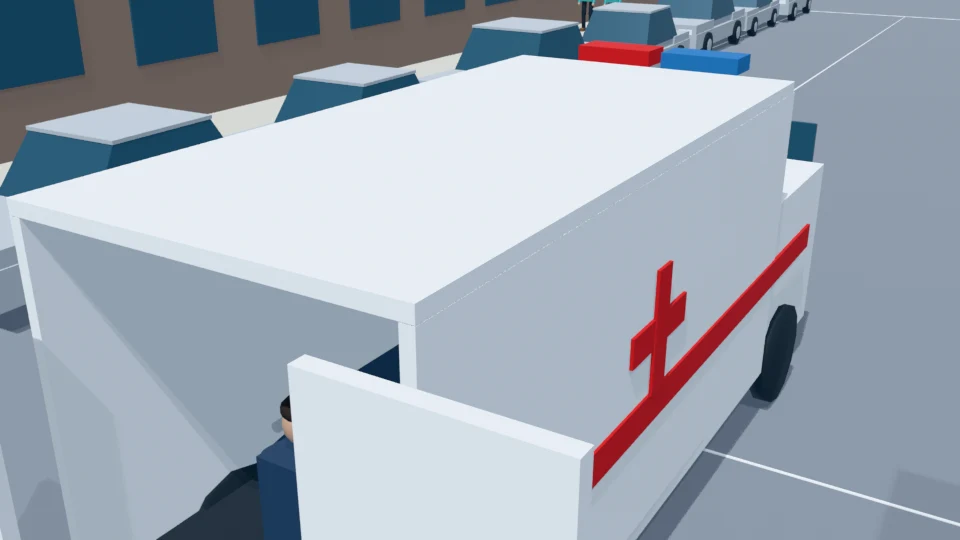
Original NAVSIM camera context
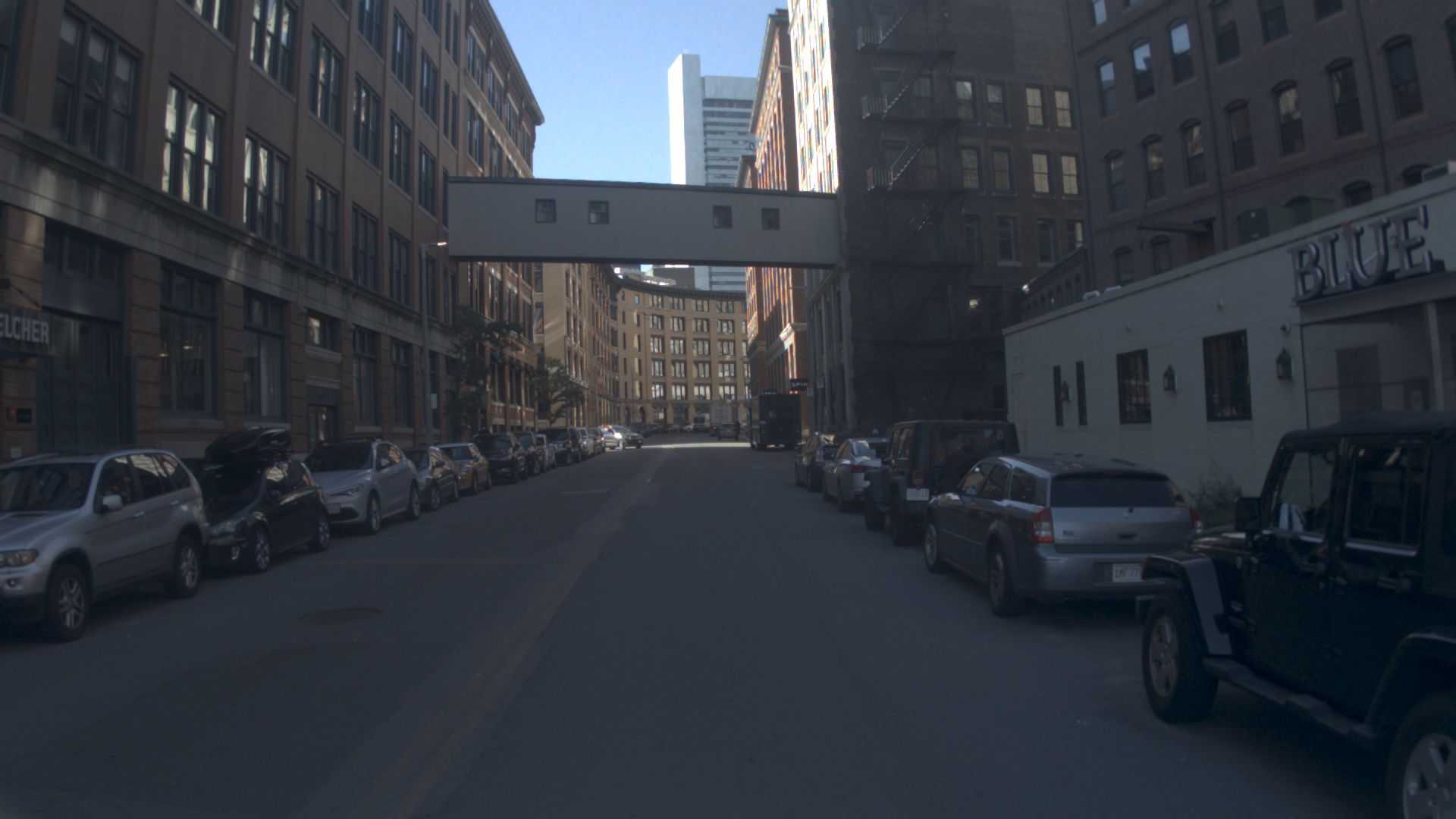
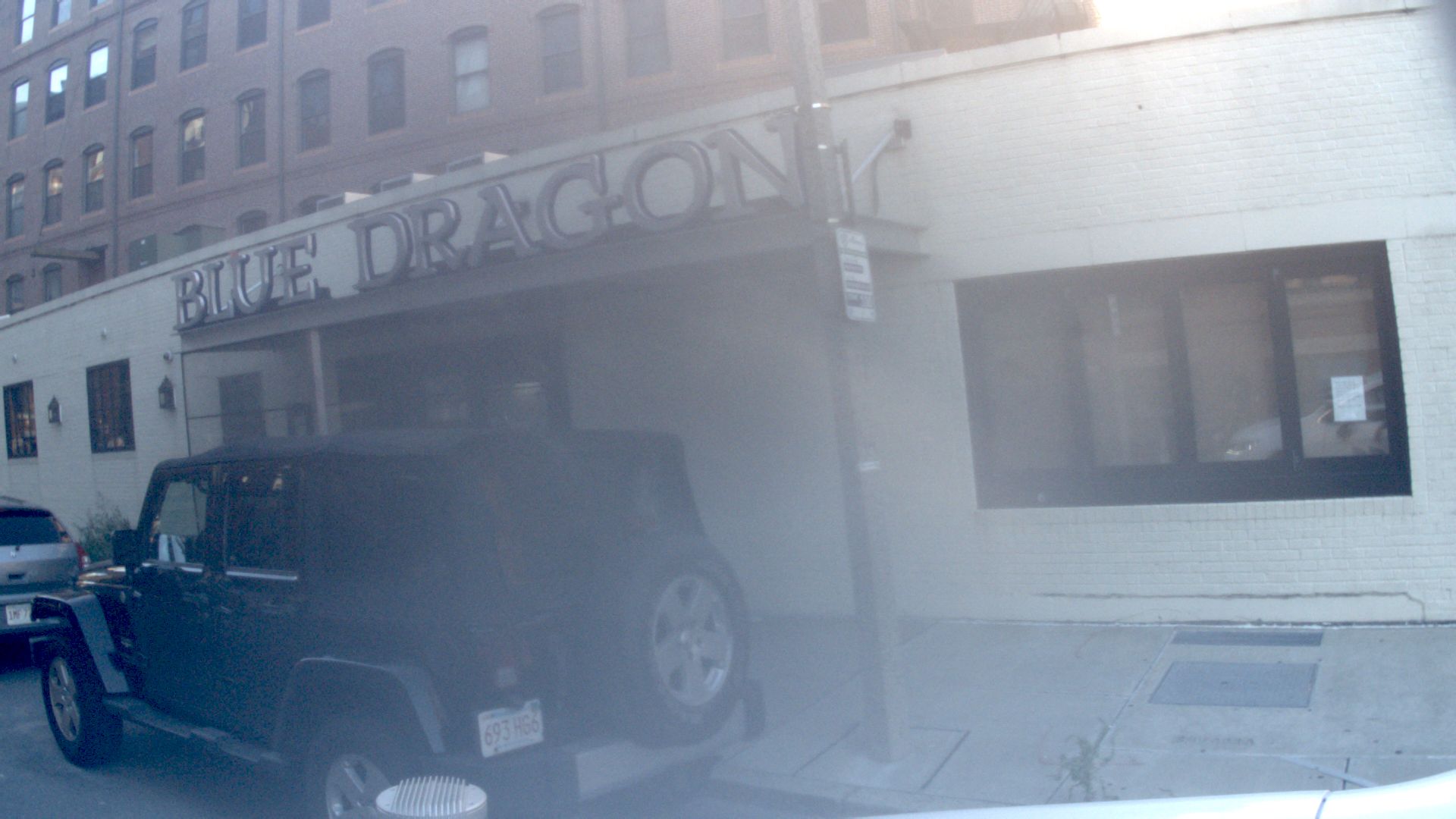
No additional background-vehicle holding corrections were needed. Original photos remain unchanged. Before later inpainting, any overlap with original-photo traffic must be resolved. Background positions in this 3D rehearsal are not an exact replay of the photographs.
After scene approval
The working pipeline will edit each original NAVSIM camera photograph with Image 2.5. Its same-time Higgsfield view will provide position and posture, annotated with facing direction and current speed. Temporal image requests will cover the full event with a 1 Hz base plus critical moments.
Assumptions and source provenance
- Image 2 establishes the enclosed urban street, buildings and overhead connection. The fainting event, ambulance and responding cast are counterfactual proposals, not observed facts.
- This is the first medical variant: the ambulance has already arrived by -7 seconds. No phone-call-before-arrival sequence is invented.
- The unspecified crew and bystanders are instantiated as two responders and two bystanders. The ambulance has a usable rear compartment, integral rear steps and opening rear doors; their exact configuration requires human review.
- The 0.55 m human support offset applies only to seated or crouching crew on the raised ambulance deck. Ground-level standing and walking roots use z=0.
- Human height denotes standing stature. The prone patient's posed footprint is approximately 1.74 m long and 0.55 m wide, aligned east-west.
- The empty stretcher carries a secured equipment case. No patient transfer, recovery, ambulance departure or additional medical procedure is assumed.
- Attachment samples include ground-slope compensation. Use support-aware alighting and lowering, stationary turns before the final short approaches, and non-graphic medical poses.
- Ego is implicit: x=0, y=0 and speed 6 m/s at -7 seconds, deceleration at 1.5 m/s squared to x=12 at -3 seconds, followed by a hold through 40 seconds.
- Any later Image 2.5 edit must use original Image 2 after human approval, preserving its architecture and using the rehearsal only for positions and postures. Retained parked vehicles require an overlap and occlusion review.
Fresh GPT-6 motion plans use semantic descriptions from the pinned consolidated catalog and NAVSIM environments. No upstream nuPlan vectors, trajectories or images are used. The four source environments are reused; 82 scenario descriptions do not mean 82 independent locations.
Higgsfield revision 2. The portable GLB combines export clips without changing geometry or animation samples.
This review uses Higgsfield revision 2 and the exact exported scene snapshot.
Higgsfield workspace (latest revision) · Download animated GLB · GPT-6 scene plan · Visual review evidence · Motion checks · Approval status